The first year
The first year is designed as a foundation year common to all four specialisations within the undergraduate programme. It enables students to acquire the technical, practical and theoretical foundations necessary for their further studies. The curriculum is entirely focused on acquiring the fundamentals of design (drawing, volume, colour, materials, coding, machinery, plans, morphology, structure, photography, video, painting) and an individualised introduction to object, spatial, visual and graphic design. It provides students with theoretical content in art history, design culture and digital cultures.
The first semester concludes with a peer assessment of the student by the teaching team, resulting in a report accompanied by the number of ECTS credits obtained. The second semester concludes with an assessment comprising an oral examination and the review of a portfolio, which will be judged on the overall quality of its presentation, writing and iconographic research. Students must obtain 60 ECTS credits to progress to the second year, as well as approval from a committee at the end of the year. There is no opportunity to retake ECTS credits at the end of the first year.
The second and third years
The following two years, leading to the DNA, form a single module.
ESAD Orléans offers four specialisations:
- Arts, Crafts and Computation (ACC)
- Digital Arts and Design (DAD)
- Edition Narration Design (DEN)
- Visual Media (VM)
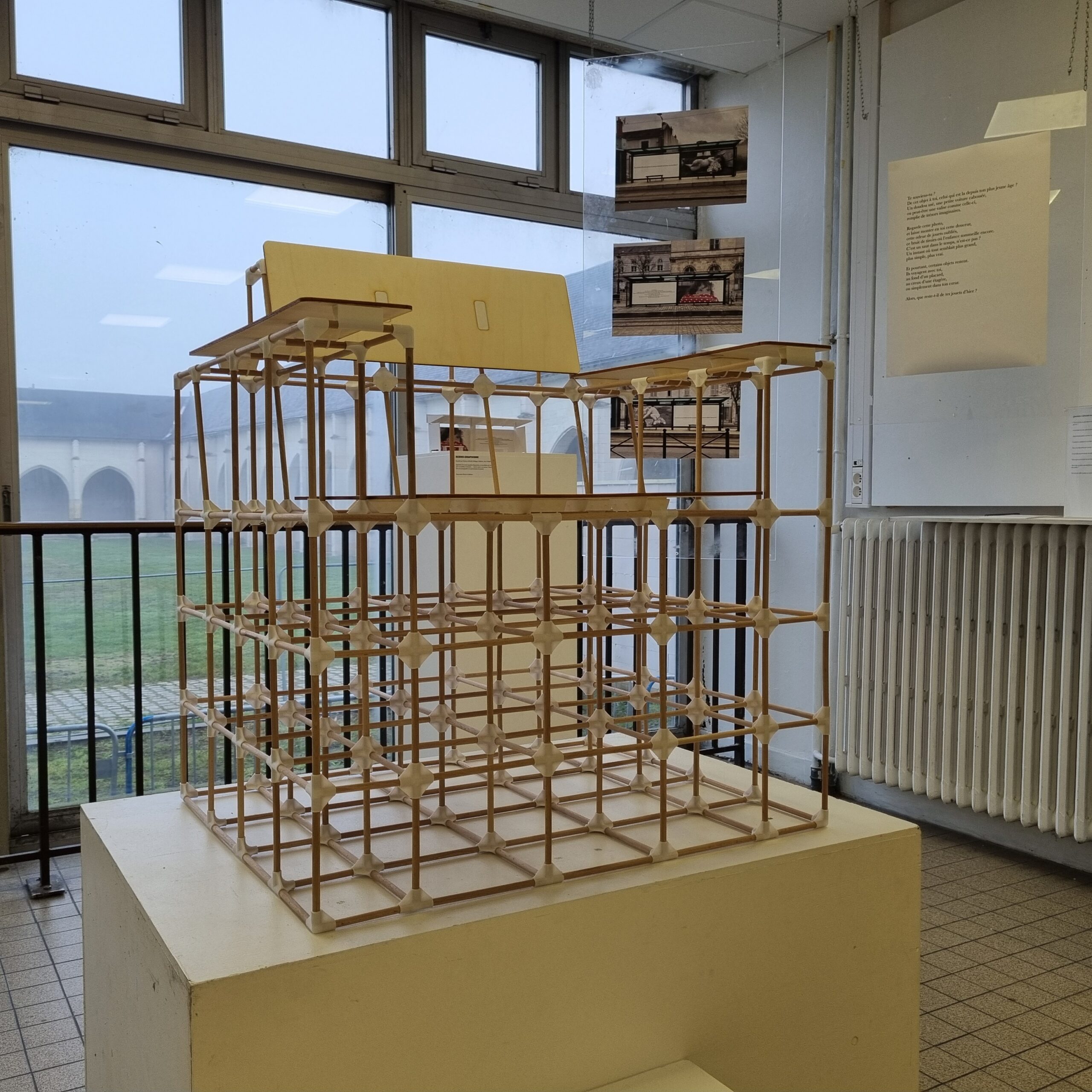
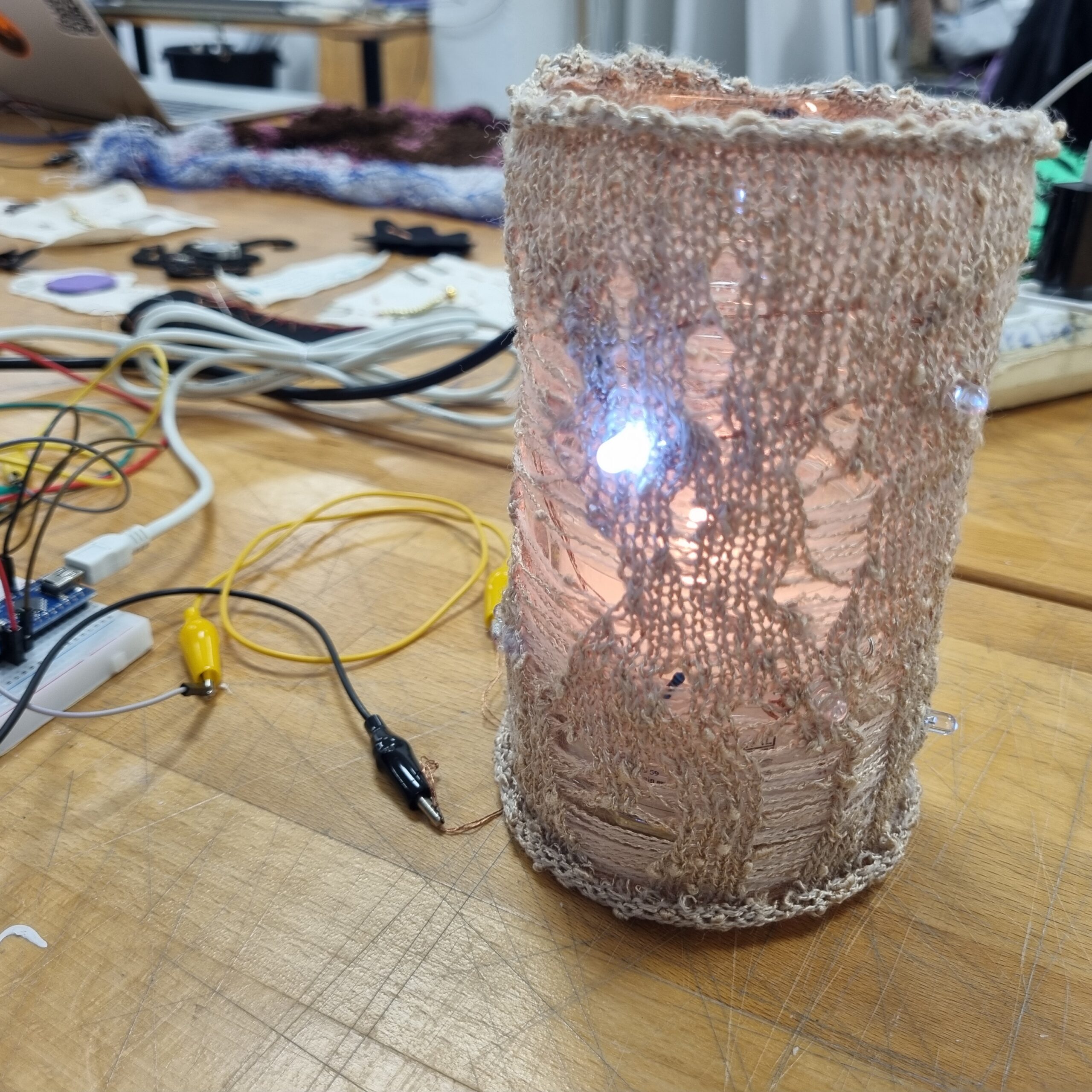
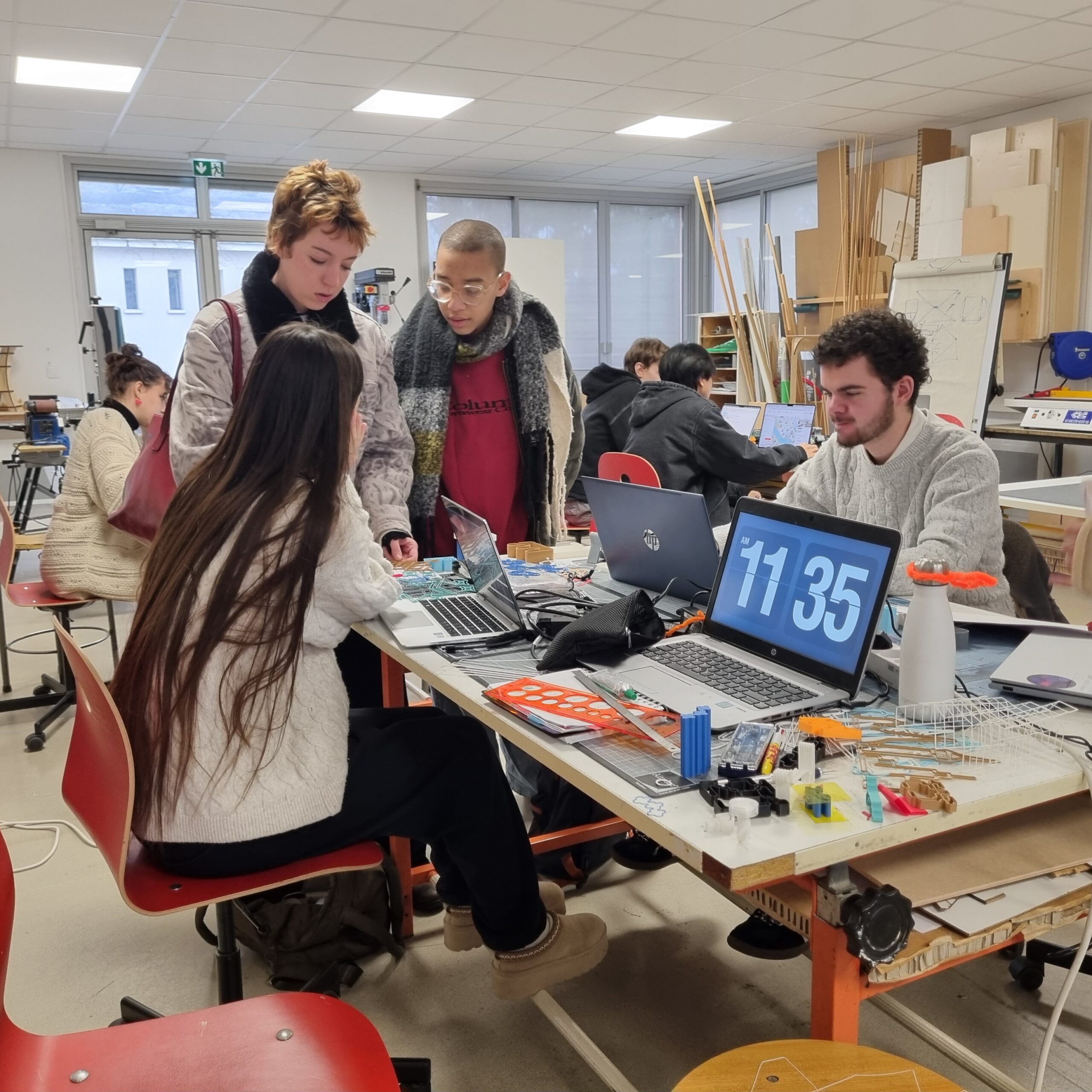
These two years provide students with a curriculum that combines compulsory projects (core curriculum), optional projects (individual pathways), modules, personalised support for their personal projects, collaborative research sessions known as ‘Sondes’, and a work placement.
Compulsory projects are designed to provide an in-depth study (80 hours per semester). Optional projects, on the other hand, allow students to tailor their course of study (30 hours per semester per project). In the final semester of the third year, students are invited to revisit one of the optional projects they have already chosen, thereby allowing them to draw on it for their final-year project.
Over the course of the two years, students must choose four or five modules. Consisting mainly of practical experiments and exercises, these modules enable students to build on their knowledge and technical skills in a specific field. They are not intended for the development of a project, but rather for acquiring the skills needed to carry it out.
These exploratory modules aim to raise awareness of research-creation activities. They are designed to introduce students to its methods, practices and objectives. Each exploratory module follows a specific (non-)methodology. Directly inspired by media theorist Marshall McLuhan, the module does not seek to convey a message, but rather to encourage an openness to the technological and cultural environment. An exploratory module does not seek proof. It is exploratory. The module opens up the mind and stimulates thought. The format of the probes is shaped by their content. Proposed by at least two lecturers, they offer a research focus linked to students’ practice and our technological environment, such as media archaeology, the ecological implications of technology, the documentary approach, typography in the context of cryptography…
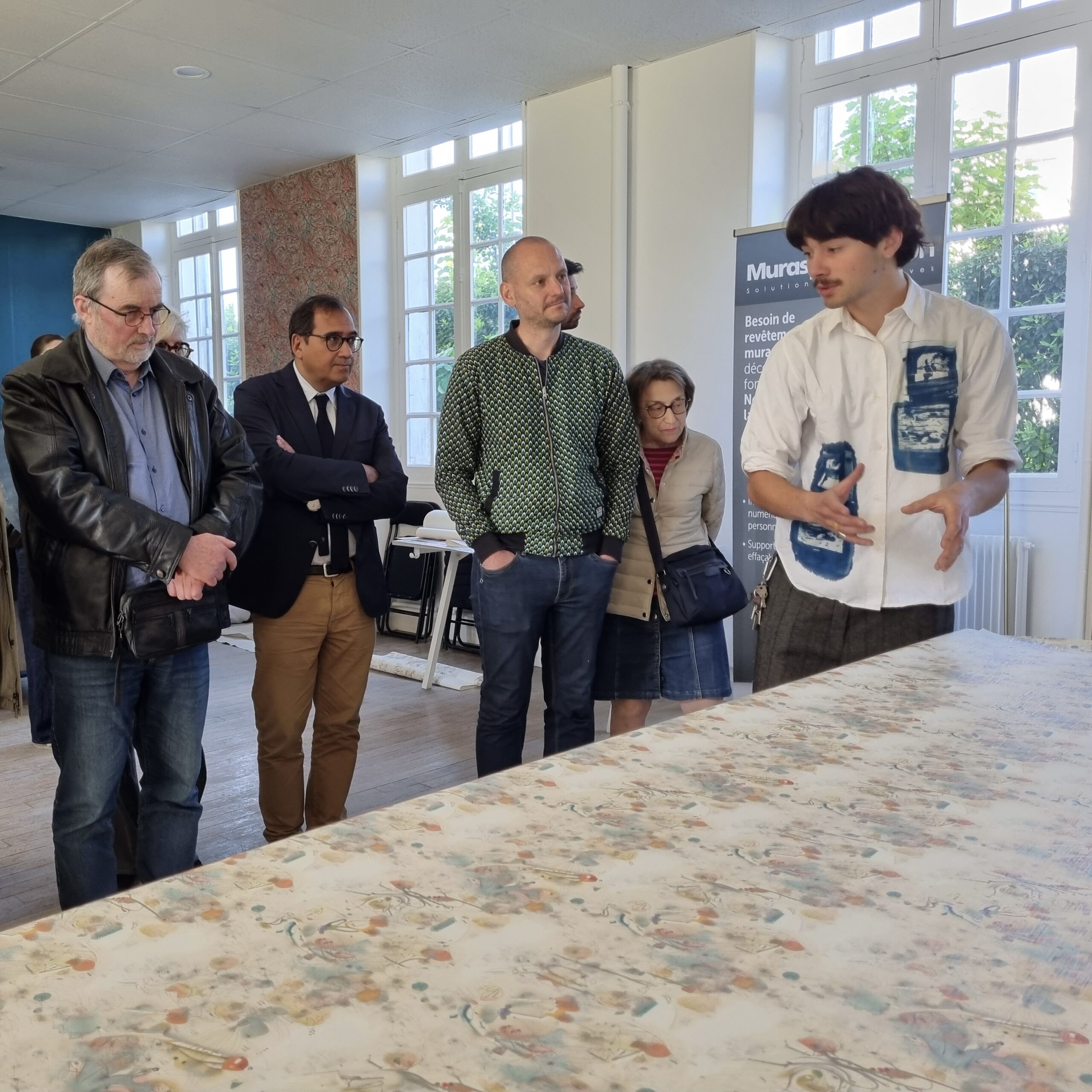
During their course, students may be asked to take part in projects specifically organised as part of a partnership (festivals, public institutions, businesses, etc.). They may also be involved in organising the school’s cultural programme (exhibitions, fairs, etc.). All these activities are eligible for ECTS credits. Finally, a professional placement is compulsory in the second year (minimum 3 months).
The second semester of the third year (the final semester of the course) focuses on the student’s individual development: it offers support from dedicated tutors and involves the preparation of a portfolio, a sort of preliminary dissertation that underpins the student’s approach. Particular attention is paid to the spatial arrangement, scenography and presentation of the final project. The end of the third year is marked by the National Diploma in Art.
Le deuxième semestre de la troisième année (dernier semestre du cursus) privilégie le parcours personnel : il propose un accompagnement par des enseignant.e.s dédié.e.s (tutorat) et la rédaction d’un dossier, sorte de pré-mémoire soutenant la démarche de l’étudiant.e. La mise en espace, la scénographie et la communication du diplôme font l’objet d’un suivi particulier. La fin de la troisième année est marquée par le Diplôme National d’Art.
Bachelor of Arts/Diplôme National d’Art (DNA)
The DNA marks the completion of the third year of study and is equivalent to a Bachelor’s degree. It is listed in the National Register of Professional Certifications. To obtain it, candidates must be able to present a personal project, a selection of work produced during their three years of study, and a written portfolio (known as the ‘written component’ of the DNA). The whole presentation is defended, for approximately thirty minutes, before a panel comprising two external experts and a representative from the school.
The assessment criteria are:
The quality of the presentation of the work (in terms of both form and content)
The relevance of the approach and research related to the project
The contextualisation of the work (the quality of the references and the breadth of knowledge).
The quality of practical and theoretical work
To attend the DNA examinations, candidates must have earned 165 ECTS credits. Furthermore, before the DNA, candidates must appear before a committee which, following an assessment, decides whether the student is capable of defending their degree.
In the event of failure, students who have obtained 120 ECTS credits at the end of the first four semesters are awarded the Certificate of Artistic Studies (CEAP), issued by the school and accredited by the Ministry of Culture.
For further information: consultez le texte réglementaire.
Practical information
Language of instruction
French
Annual tuition fees
€830 (€475 for scholarship holders)
Admission
En première année
En cours de cursus
Contact
Student Affairs